
Wooden Dummy as Therapeutic Alignment Tool
Wooden Dummy as Therapeutic Alignment Tool
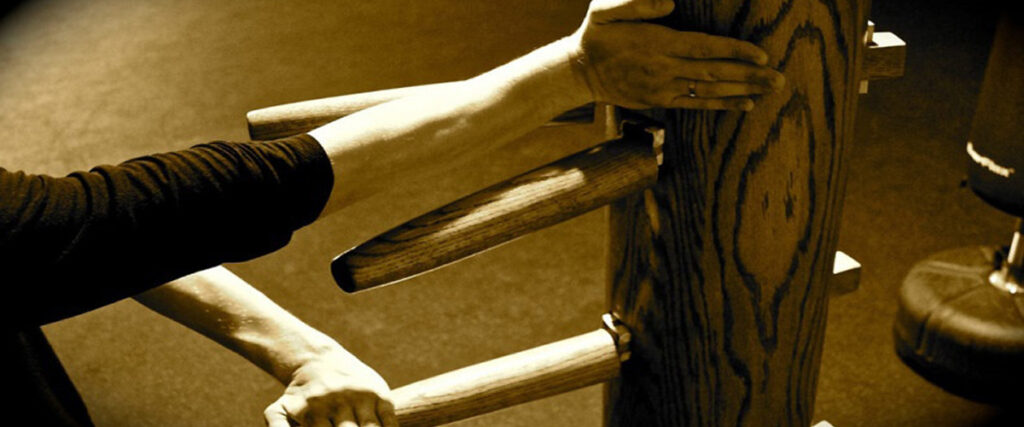
The wooden dummy is often misunderstood. In our senior Wing Chun training, it is not used for striking or impact. It is a precision alignment instrument designed to restore structure, confidence, and safe movement patterns.
This training method emphasizes controlled, light contact. The dummy serves as a fixed reference point that allows practitioners to recalibrate posture, balance, and forward intention without physical risk.
Not for Impact. For Alignment.
The wooden dummy functions as a stationary partner. Because it never moves, it provides consistent spatial feedback. This makes it ideal for therapeutic application, especially for seniors who benefit from predictable, low intensity training environments.
What It Teaches
Distance Awareness
Students learn to gauge personal space accurately. Proper distance reduces overreaching, leaning, and instability during movement.
Posture Correction
The structure of the dummy reinforces upright alignment. It encourages spinal integrity, shoulder relaxation, and correct joint stacking.
Coordination
Hand and foot synchronization improves through guided repetition. Slow, mindful movement builds neuromuscular efficiency.
Stepping Confidence
Forward stepping drills are practiced safely. The fixed arms of the dummy provide tactile reassurance, reducing hesitation during weight transfer.
A Physical Therapist That Never Moves
Think of the wooden dummy as a silent therapeutic partner. It provides immediate structural feedback without unpredictability. This consistency is especially valuable for older practitioners rebuilding trust in their bodies.
Light Contact Only
Training is gentle and controlled. The objective is sensitivity and alignment, not force. This protects joints, preserves energy, and supports longevity.
Relearning Safe Forward Movement
One of the most important benefits for seniors is restoring forward stepping mechanics. Many falls occur because individuals hesitate, shuffle, or lose balance during transition steps.
Through guided wooden dummy practice, seniors relearn:
- Stable weight shifting
- Controlled forward intention
- Proper foot placement
- Upright structural support
As stepping improves, fear decreases. When fear decreases, mobility increases.
The wooden dummy becomes more than a training device. It becomes a confidence building tool that supports safer walking, improved balance, and greater independence