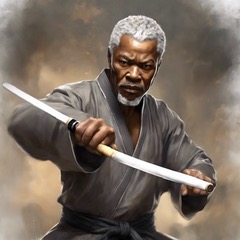

Senior Wing Chun

METAPHYSICAL WING CHUN
FOR SENIORS
Transform your fitness and find confidence through out
online Wing Chun training programs designed specifically for older adults.

The Still Center: A Narrative on Metaphysics and Wing Chun

We did not come to Wing Chun searching for metaphysics. I came seeking efficiency—short movements, direct lines, an economy of motion that promised clarity in chaos. Yet, as time passed, the art revealed itself not merely as a fighting system, but as a living inquiry into being itself. Wing Chun, practiced deeply, becomes a metaphysical dialogue between body, mind, and the invisible structure beneath reality.
Metaphysics asks fundamental questions: What is real? What exists beyond appearances? What is the nature of cause, time, and self? Wing Chun does not answer these questions in words. It answers them through experience.
At the heart of Wing Chun lies centerline theory—the invisible axis that governs balance, structure, and intent. This line cannot be seen, yet it determines everything. In metaphysical terms, the centerline resembles the unseen order behind phenomena, much like Plato’s forms or Taoist conceptions of the Way. The practitioner aligns to something intangible, trusting an invisible truth to guide physical action. When the centerline is lost, confusion follows. When it is maintained, action becomes effortless.
Stillness is another shared principle. In metaphysics, stillness is not absence but potential—the womb of motion. In Wing Chun, stillness is trained through Siu Nim Tao, the ā€œLittle Ideaā€ form. At first glance, the form appears slow, almost static. But within its silence, intention is sharpened, awareness expands, and the practitioner learns to act without tension. This mirrors the metaphysical idea that reality arises not from force, but from alignment with underlying principles.
Wing Chun teaches non-resistance, not as weakness, but as intelligence. When force meets force, both are diminished. Instead, one yields, redirects, and returns energy along its original path. This reflects a metaphysical understanding of causality: effects are not destroyed, only transformed. Energy does not disappear—it changes direction. In this way, Wing Chun embodies the metaphysical law of conservation, applied not to physics alone, but to conflict and consciousness.

Perhaps the deepest metaphysical insight Wing Chun offers is its treatment of the self. In combat, hesitation arises when the ego intrudes—when one clings to fear, pride, or outcome. True responsiveness emerges only when the self dissolves into the moment. The practitioner no longer decides to act; action happens. This echoes Eastern metaphysical traditions where the illusion of a separate self is seen as the root of suffering. In Wing Chun, the illusion of control is replaced by presence.

Time, too, is experienced differently. Rather than reacting after an event occurs, Wing Chun trains sensitivity—Chi Sao, or ā€œsticking hands,ā€ cultivates awareness in the present instant. Past and future collapse into now. Metaphysically, this resembles the idea that time is not linear but experiential. The moment expands, and within that expansion lies freedom.

Ultimately, Wing Chun does not teach metaphysics as an abstract system. It embodies it. The practitioner learns that truth is not something to be believed, but something to be aligned with. Structure replaces strength. Awareness replaces anticipation. Being replaces striving.

In this way, Wing Chun becomes a moving meditation on reality itself. Each stance is a question. Each strike, an answer. And in the quiet space between movements, one discovers that the deepest truths are not found through force—but through balance.

My Mission

Our mission is to guide seniors in the practice of Wing Chun as a living art—cultivating physical stability, mental clarity, and inner harmony. Through mindful movement, breath, and metaphysical understanding, we empower students to age with strength, awareness, and peace.ā€

Spiritually Oriented Mission Statement (Metaphysical Emphasis)

ā€œWe teach Wing Chun to seniors as a path of balance between body, mind, and spirit. By integrating traditional martial principles with metaphysical insight, we foster grounded movement, calm awareness, and the quiet strength that supports longevity and self-realization.ā€

Health, Longevity & Wisdom Focus

ā€œOur mission is to support healthy aging through Wing Chun training that honors the wisdom of time. We blend efficient martial mechanics with metaphysical principles—energy flow, intention, and stillness—to enhance mobility, confidence, and inner resilience.ā€

Gentle, Accessible, and Empowering

ā€œWe provide seniors with a safe, thoughtful approach to Wing Chun that emphasizes structure over force and awareness over aggression. Guided by metaphysical principles, our teaching nurtures vitality, presence, and self-trust at every stage of life.ā€

Traditional Wisdom Framing (Eastern Philosophy Tone)

ā€œRooted in the traditions of Wing Chun and guided by metaphysical understanding, our mission is to help seniors refine balance, conserve energy, and move in harmony with natural law. Training becomes a practice of simplicity, efficiency, and inner cultivation.ā€

How it works?

To find a school or instructor that offers Wing Chun Kungfu classes for seniors. Some schools may offer classes specifically designed for seniors, while others may have classes that are suitable for all ages.

1

Start with Basic Movements

Wing Chun Kungfu involves a lot of movements that can be quite complex. Seniors should start with the basic movements and gradually progress to more advanced techniques.

2

Practice
Regularly

Like any other form of exercise, regular practice is key to mastering Wing Chun Kungfu. Seniors should aim to practice at least a few times a week.

3

Take it
Slow

Seniors should not rush the learning process. It's important to take it slow and ensure that each movement is performed correctly to avoid injury.

4

Stay Hydrated
and Rest

Seniors should remember to stay hydrated during their training sessions and to rest when needed. Overexertion can lead to injuries and other health problems.

5

Use Training
Tools

There are various training tools available that can help seniors learn Wing Chun Kungfu. These include training videos, books, and online tutorials.

6

Join a
Group

Joining a group can provide seniors with the motivation and support they need to continue their training. It can also make the learning process more enjoyable

7

Stay
Positive

Learning a new skill can be challenging, especially for seniors. However, it's important to stay positive and to keep trying, even when progress seems slow

8

Get a Physical
Check-up

Before starting any new exercise regimen, it's important for seniors to get a physical check-up to ensure that they are in good health.

Senior-Focused Training

Beginner Wing Chun

Develop Fundamental Skills and unleash the power of Wing Chun

Practice Daily

Follow to build you skills & fitness

Every-day Self Defense

Equip your suit to handle common threats in daily life.

Interactive Training Program Pricing Soon to Come

1-Day Trial Free

$ 0 1 Day
  •  

7-Day Starter Pack

$ 19 7 Days
  •  

14-Day Intro Program

$ 39 14 Days
  •  

Monthly Online Training

$ 59 Per Month
  •  

Private 1-on-1 Session

$ 35 Per Session
  •  

Demo Lessons

Instructors

Wing Chun is known for its emphasis on close-range combat, quick punches and kicks, and a defense strategy that involves simultaneously attacking and defending. It also emphasizes relaxation, and using the opponent's force against them rather than relying on brute strength

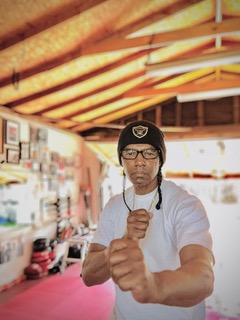
Instructor: Frank> Self Defense> Si Lim Tau> Chum Kiu> MCMAP

Wing Chun Kung Fu, also known as Wing Tsun, is a Chinese martial art that originated in the southern part of China around 300 years ago during the Qing Dynasty. The exact origins of Wing Chun are shrouded in mystery and folklore, with several different theories and legends associated with its creation.

Testimonials

Wing Chun is known for its emphasis on close-range combat, quick punches and kicks, and a defense strategy that involves simultaneously attacking and defending. It also emphasizes relaxation, and using the opponent's force against them rather than relying on brute strength

Instructor: Frank> Self Defense> Si Lim Tau> Chum Kiu> MCMAP

ALMAVISION

Wing Chun Kung Fu, also known as Wing Tsun, is a Chinese martial art that originated in the southern part of China around 300 years ago during the Qing Dynasty. The exact origins of Wing Chun are shrouded in mystery and folklore, with several different theories and legends associated with its creation.

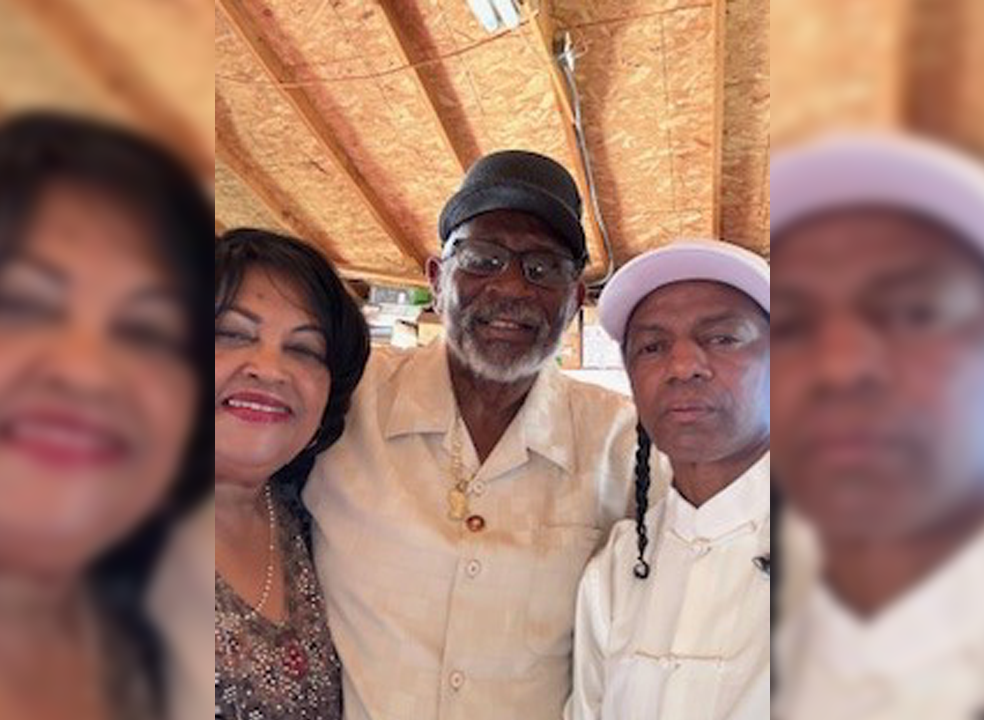
The Sifu’s

Left to Right> Sifu Phil, Sifu Moss, Master Hawkins, Sifu Robert

Si Lim Tau, also known as "Little Idea" or "Small Thought", is the first form taught in the Wing Chun Kung Fu system. It is a series of movements and techniques that serve as the foundation of Wing Chun's martial arts philosophy.

The form is performed in a stationary position and focuses on the development of the centerline concept, proper structure, and balance. It also introduces the practitioner to the basic hand movements and stances of Wing Chun, such as the Tan Sao, Fook Sao, and Bong Sao.

Si Lim Tau is crucial for building the correct arm and body positioning, and understanding the energy principles in Wing Chun. It is often said that the secrets of Wing Chun are all hidden in Si Lim Tau

What We Offer

TRAINING PROGRAMS

Physical fitness

Wing Chun training involves various exercises and drills that improve strength, flexibility, balance, and coordination. It is a full-body workout that helps to improve overall fitness and stamina.
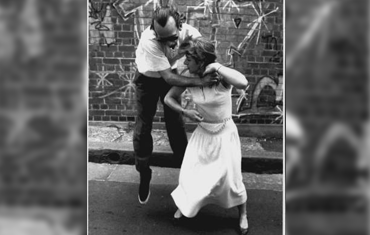
Self-defense

Wing Chun is a practical martial art that focuses on efficient and effective self-defense techniques. By learning Wing Chun, you can develop the skills and confidence to protect yourself in real-life situations.
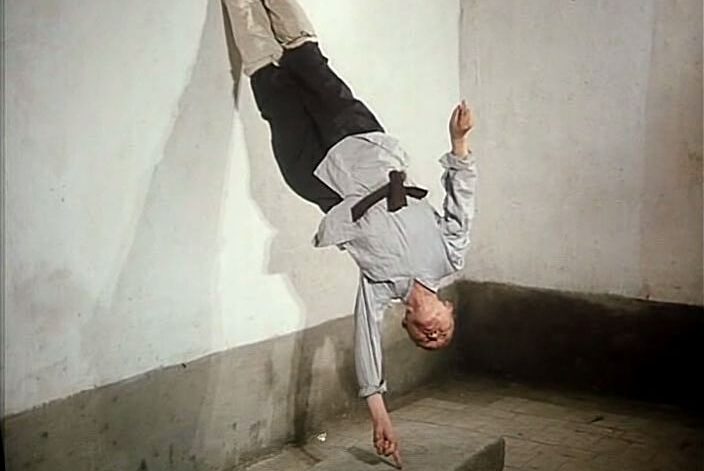
Mental discipline

Wing Chun requires focus, concentration, and discipline. Through regular practice, you can develop mental clarity, improve your ability to concentrate, and enhance your overall mental discipline.

Our Results in Numbers

A 1985 study found that children in martial arts have an increased sense of responsibili-
ty, and a higher sense of self-esteem.

45

National Champions

39

City
Champions

56

Gold
Medalists

98

All
Medals

Leave a Review

Our Results in Numbers

20

Jan, Saturday

April Black Belt Exam

The examination will begin with an introduction speech on what martial arts mean to you.

20

Jan, Saturday

April Black Belt Exam

The examination will begin with an introduction speech on what martial arts mean to you.

Blog Feed

RECENT BLOGS

10/01/2024

AI & WingChun

AI can be combined with Wing Chun applications in several ways

to enhance training and performance. Here are a few examples:

Photogallery

SIGN UP FOR UPDATES